

Updated September 17, 2026
Broccoli florets may be simple, but they’re one of the easiest vegetables to work into everyday meals. These small, branching pieces from the crown of a broccoli head cook quickly and work well roasted, steamed, sautéed, added to stir-fries, or served raw.
In this guide, you’ll find practical tips for cutting and preparing broccoli florets, measuring them by the cup, understanding their basic nutrition, and using them in easy recipes. Whether you’re making a quick side dish or adding broccoli to a larger meal, the goal is to make preparation simple and straightforward.
What You’ll Need
You don’t need much to prepare broccoli florets: a sharp knife, a cutting board, and a colander for rinsing. A measuring cup or kitchen scale can also be useful when a recipe calls for a specific amount.
How to Prepare Broccoli Florets
Start by cutting the broccoli into evenly sized florets, then rinse and drain them well before cooking. Keeping the pieces similar in size helps them cook more evenly, whether you’re steaming, roasting, sautéing, or blanching them.
Cutting Broccoli into Florets
Step-by-step guide:
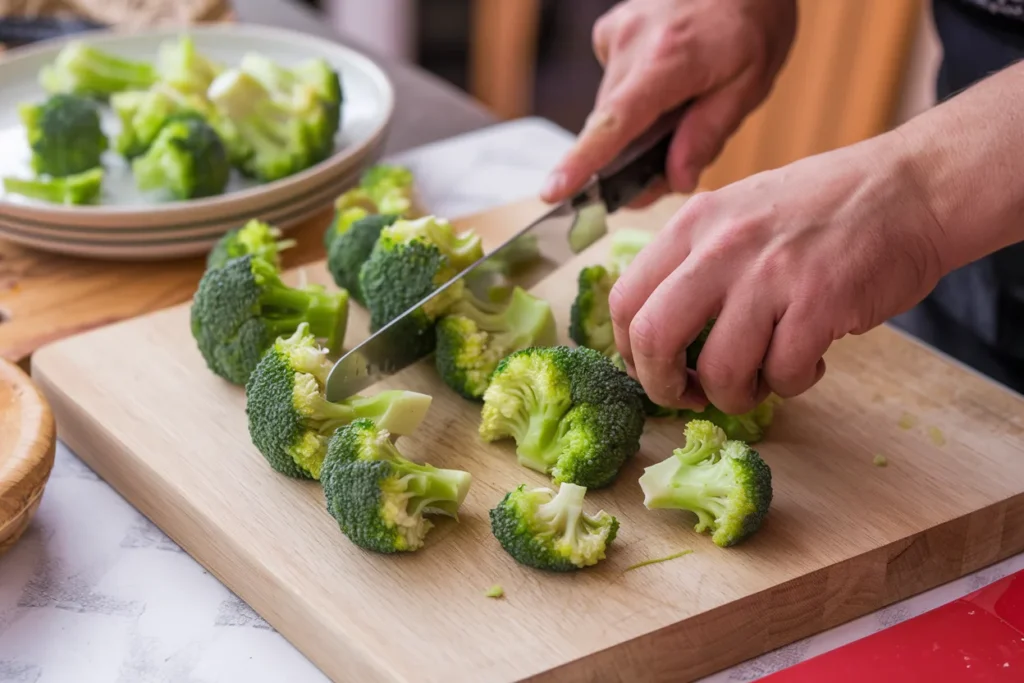
- Place the broccoli head on a cutting board, stem side down.
- Using a sharp knife, slice through the thick stalk near the base of the florets.
- Trim the florets into bite-sized pieces, keeping them uniform for even cooking.
- Don’t discard the stalk! Peel and chop it into smaller pieces to cook alongside the florets or save it for soup or stir-fry.
Washing and Prepping Florets
Give the broccoli florets a good rinse before cooking to remove surface dirt and debris.
- Place the trimmed florets in a colander.
- Rinse them thoroughly under cool running water, gently moving them around so the water reaches all sides.
- Let them drain well, then pat them dry if you’re roasting or sautéing.
Once washed and drained, the florets are ready to cook or use raw.
Cooking Broccoli Florets
There are several ways to cook them, depending on your taste preferences and the type of dish you’re preparing. Each technique highlights a distinct texture and flavor.
- Steaming: Cook for 5–7 minutes until tender but still bright green. Steaming gives the florets a tender texture while keeping their fresh, mild flavor.
- Roasting: Toss florets with olive oil, garlic, salt, and pepper. Roast at 425°F (220°C) for 20–25 minutes for caramelized edges and a slightly nutty flavor.
- Sautéing: Heat olive oil in a pan, add broccoli florets, and cook for 8–10 minutes, stirring occasionally. This is a quick method that infuses the florets with a rich, savory taste.
- Blanching: Boil florets in salted water for 2–3 minutes, then transfer to an ice bath to retain color and crispness. This method is great for prepping broccoli for salads or stir-fries.
Tip: For the best texture, aim for tender florets with a slight bite. Avoid overcooking, which can make broccoli soft and dull its vibrant green color.
Broccoli Florets Nutrition
Broccoli florets provide fiber along with several vitamins and minerals, including vitamin C, vitamin K, and folate. They also contain naturally occurring plant compounds such as sulforaphane. Here’s a closer look at the nutrition found in a typical serving.
Nutritional Value
- Calories: A 1-cup serving of broccoli florets contains approximately 31 calories.
- Fiber: The same serving provides about 2.4 grams of dietary fiber.
- Vitamins and minerals: Broccoli provides several micronutrients, including:
- Vitamin C
- Vitamin K
- Folate
- Plant compounds: Broccoli also contains naturally occurring compounds such as sulforaphane.
Nutrition values can vary by portion and preparation. For detailed food-composition data, see USDA FoodData Central.
Broccoli Florets vs. the Stalk
When a recipe calls for broccoli florets, it means the small, branching pieces from the crown rather than the thick main stalk. Both parts are edible, but they behave a little differently in the kitchen.
Florets cook quickly and hold onto seasonings and sauces, while the stalk is firmer and usually benefits from peeling and thinner slicing. If you’re cooking both together, cut the stalk into smaller pieces so everything cooks more evenly.
Easy Broccoli Florets Recipe Ideas
Broccoli florets work well in everything from simple side dishes to quick stir-fries. Here are three easy ways to use them, with different cooking methods and flavors to choose from.
Roasted Broccoli Florets with Garlic and Olive Oil
Roasting gives the florets browned edges and a deeper, slightly nutty flavor while keeping the preparation simple.
Ingredients:
- 4 cups broccoli florets
- 2 tablespoons olive oil
- 3 garlic cloves, minced
- Salt and pepper to taste
Instructions:
- Preheat your oven to 425°F (220°C).
- Toss broccoli florets with olive oil, garlic, salt, and pepper in a large bowl.
- Spread them evenly on a baking sheet.
- Roast for 20–25 minutes, stirring halfway through, until the edges are golden brown.
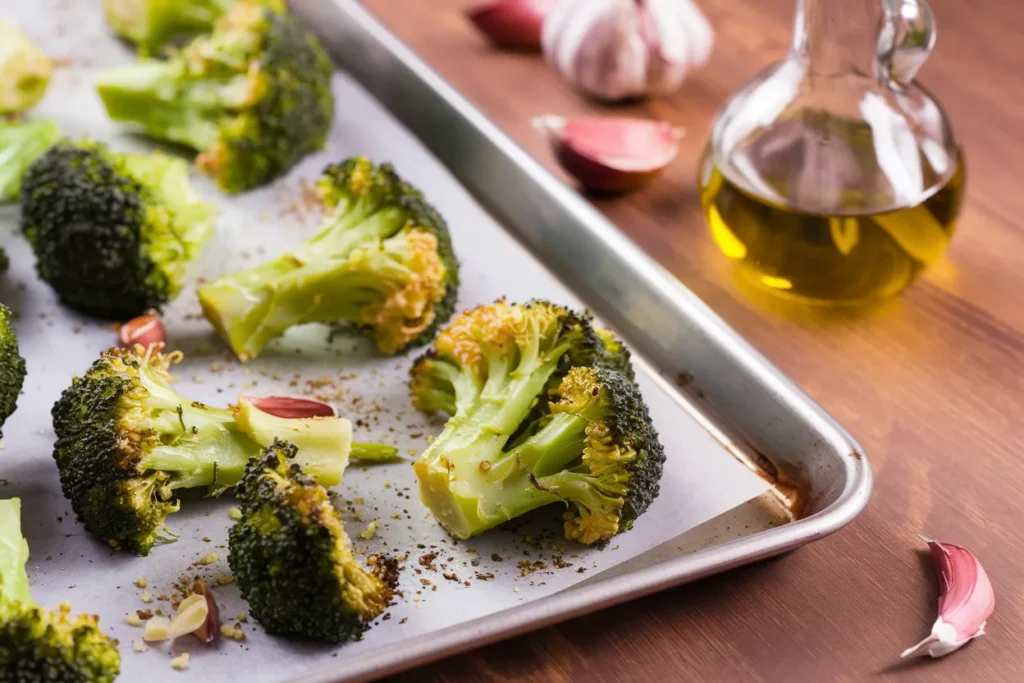
Tip: For extra flavor, sprinkle grated Parmesan cheese on the florets before serving. Pair this dish with a creamy Caesar Pasta Salad for a complete and satisfying meal.
Steamed Broccoli Florets with Lemon Butter
Steaming is a simple way to cook broccoli florets until tender while keeping their fresh flavor and bright color.
Ingredients:
- 4 cups broccoli florets
- 2 tablespoons butter, melted
- 1 tablespoon fresh lemon juice
- Salt and pepper to taste
Instructions:
- Steam the broccoli florets for 5–7 minutes until tender but still bright green.
- Drizzle with melted butter and lemon juice.
- Season with salt and pepper to taste.
This simple dish makes a perfect side for grilled chicken, fish, or pasta.
Broccoli Florets Stir-Fry
For a quick weeknight meal, this colorful stir-fry combines broccoli florets with bell pepper, onion, ginger, and a simple savory sauce.
Ingredients:
- 4 cups broccoli florets
- 2 tablespoons vegetable oil
- 1 bell pepper, sliced
- 1 small onion, sliced
- 2 tablespoons soy sauce
- 1 teaspoon sesame oil
- 1 teaspoon grated ginger
Instructions:
- Warm vegetable oil in a large skillet or wok over medium-high heat.
- Add broccoli, bell pepper, and onion, stirring frequently for 5–7 minutes.
- Stir in soy sauce, sesame oil, and ginger. Cook for another 2 minutes.
Serve this colorful dish over steamed rice or quinoa for a satisfying meal. For another way to use broccoli florets, try this Quinoa and Broccoli Spoon Salad, which pairs briefly blanched broccoli with quinoa, apple, and a lemon-Dijon dressing.
Measuring and Portioning
When a recipe calls for broccoli florets by the cup, use bite-size pieces and fill the measuring cup loosely rather than packing them down. The examples below show how to measure common amounts more consistently.
How to Measure a Cup of Broccoli Florets
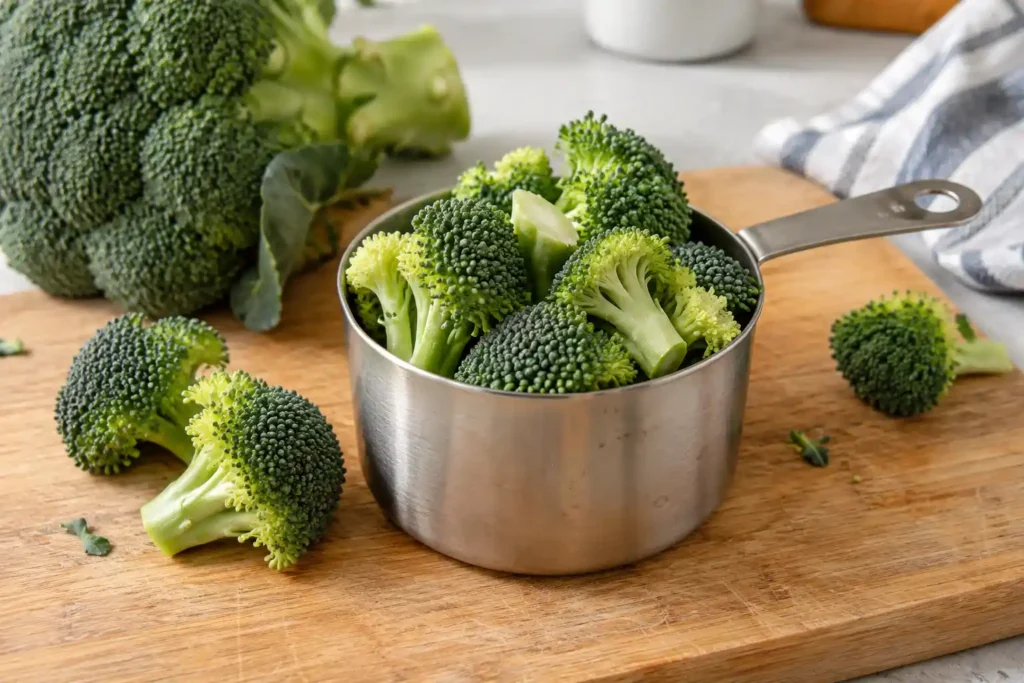
A standard measuring cup works well for broccoli florets. To measure:
- Trim and separate the florets into bite-sized pieces.
- Loosely fill the measuring cup without pressing down.
- A packed cup may contain significantly more broccoli, which can affect recipes and serving sizes.
What Does 1 Cup of Broccoli Florets Look Like?
One cup of raw broccoli florets is about 91 grams when measured as chopped broccoli. If you don’t have a kitchen scale, loosely fill a standard measuring cup with bite-size florets without pressing them down.
Is 2 Cups of Broccoli Too Much?
Two cups of broccoli florets can work well as a generous side dish or as part of a larger recipe. The right amount depends on the dish, how the broccoli is prepared, and how many people you’re serving.
FAQs
Broccoli florets are the small, branching clusters that make up the crown of a broccoli head. They’re usually separated from the thicker stalk into bite-size pieces for cooking or serving raw.
Start by removing the thick main stalk, then cut through the smaller stems where they naturally branch away from the crown. For even cooking, try to keep the florets roughly the same size.
Yes. The stalk is edible and has a firmer texture than the florets. Peel away the tougher outer layer, then slice or chop the tender center for stir-fries, soups, or roasting.
Broccoli florets can be steamed, roasted, sautéed, blanched, or added to stir-fries. Roasting gives them browned edges, while steaming and blanching keep the texture softer and the flavor mild.
Avoid overcooking them and keep the pieces similar in size. For roasting or sautéing, dry the florets well after washing so excess moisture does not steam them in the pan.
Conclusion
Broccoli florets are easy to work into everyday meals, whether you roast them for crisp edges, steam them for a quick side, or add them to stir-fries. Once you know how to cut, wash, cook, and measure them, they become a simple ingredient to keep in regular rotation.
Try one of the methods above and adjust the seasoning to match the rest of your meal. If you have a favorite way to use broccoli florets, share it in the comments.