
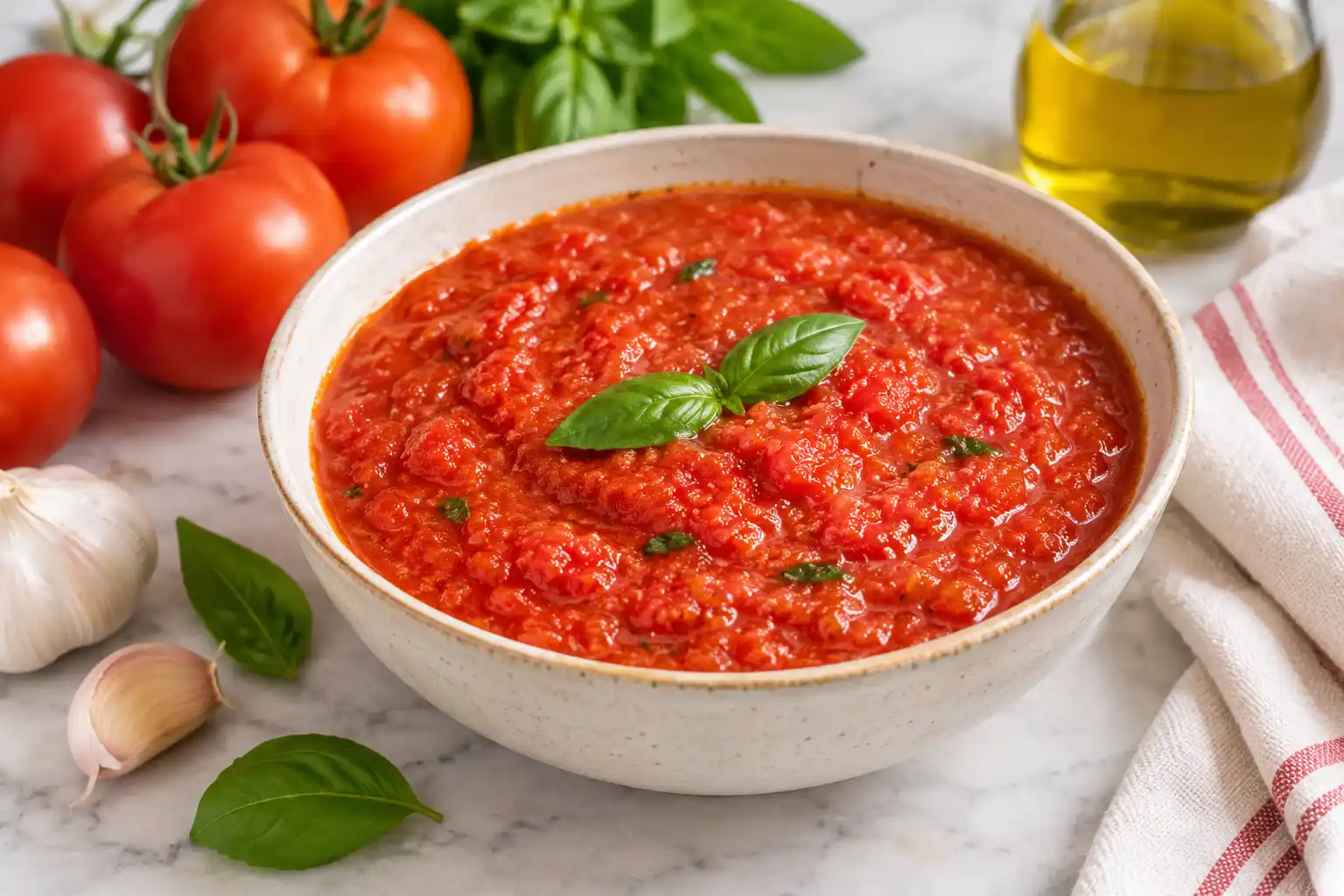
This quick fresh tomato sauce turns ripe tomatoes into a simple homemade sauce in about 30 minutes. The tomatoes are grated to leave most of the skin behind, then simmered briefly with olive oil, garlic, basil, and a small amount of tomato paste.
The result is a light, fresh-tasting sauce with enough body to coat pasta without the long cooking time of a traditional spaghetti sauce.
Ingredients
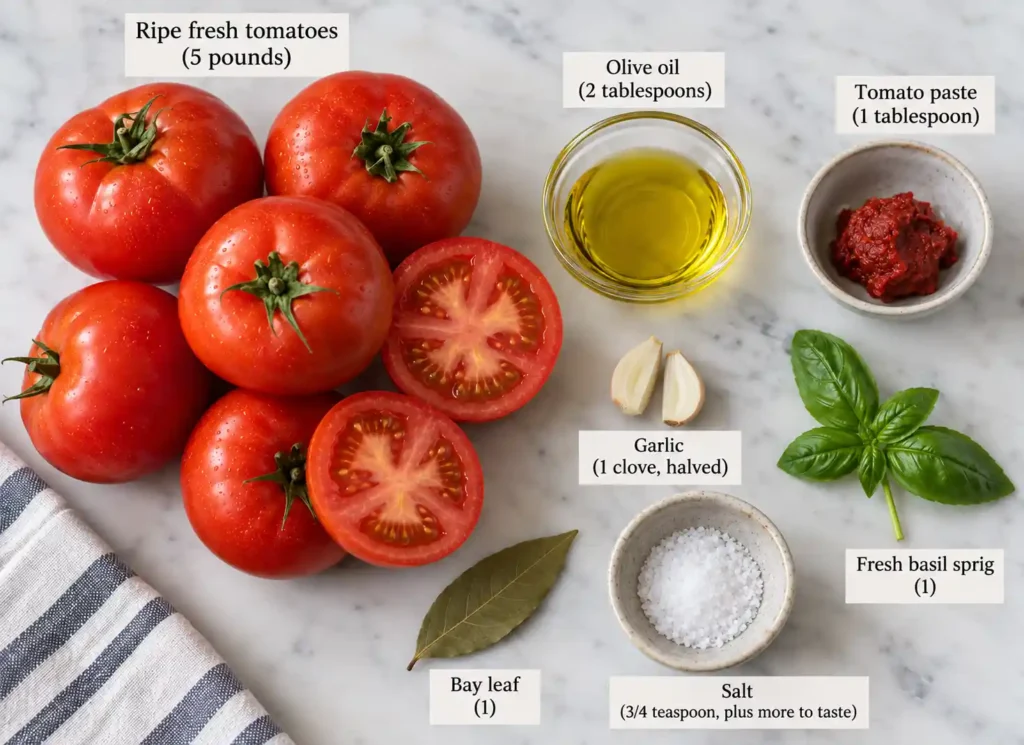
- 5 pounds ripe fresh tomatoes
- 2 tablespoons olive oil
- 1 tablespoon tomato paste
- ¾ teaspoon salt, plus more to taste
- 1 garlic clove, halved
- 1 fresh basil sprig
- 1 bay leaf
Instructions
1. Prep the tomatoes
Cut the tomatoes in half crosswise. If they are especially juicy, scoop out some of the loose seed gel before grating.
2. Grate the tomatoes
Hold each tomato half by the skin and grate the cut side against the large holes of a box grater. Stop when most of the flesh has been grated and only the skin remains.
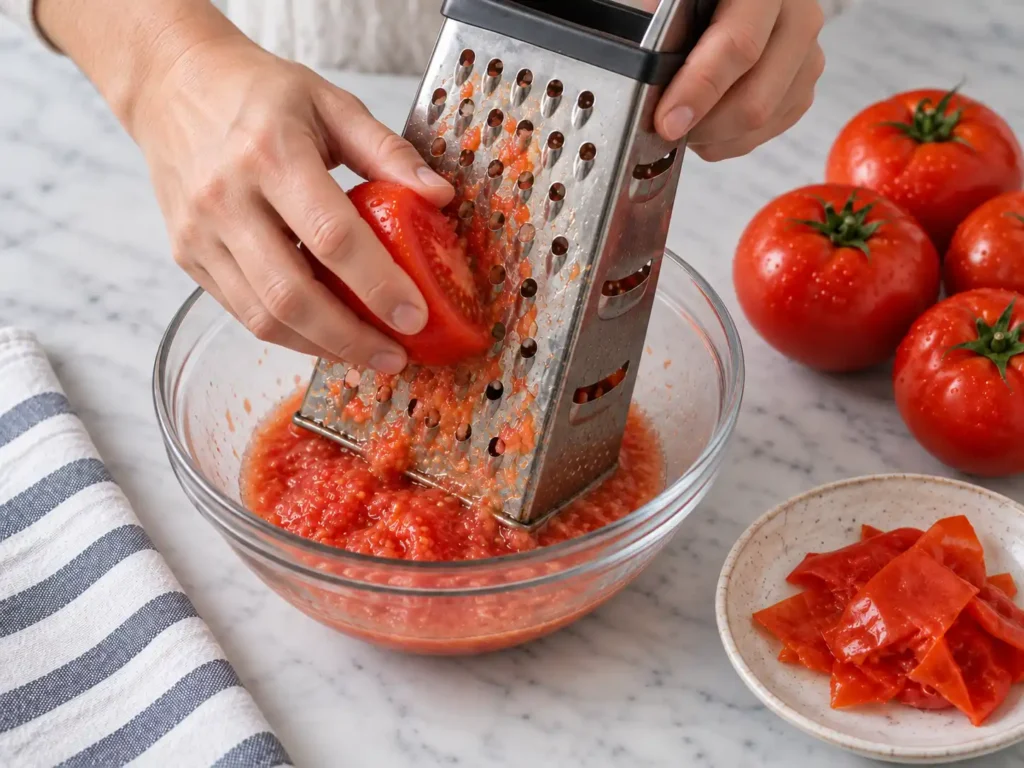
Discard the skins and transfer the grated tomato pulp and juices to a wide, shallow saucepan.
3. Add the remaining ingredients
Add the olive oil, tomato paste, salt, garlic, basil sprig, and bay leaf. Stir until the tomato paste is evenly mixed into the tomatoes.
4. Bring to a simmer
Place the pan over medium-high heat and bring the mixture to a gentle boil. Reduce the heat as needed to keep the sauce at a steady simmer.
5. Reduce the sauce
Cook uncovered for about 10 to 15 minutes, stirring occasionally.
The sauce is ready when some of the excess liquid has cooked off and the texture is thick enough to coat a spoon without becoming dense or paste-like. If your tomatoes are very watery, give the sauce a few extra minutes.
6. Finish and season
Remove the garlic, basil sprig, and bay leaf. Taste and add more salt if needed.
Serve warm, or let the sauce cool before refrigerating or freezing.
How to Keep Fresh Tomato Sauce From Getting Watery
Fresh tomatoes vary a lot in moisture, so the cooking time may change slightly from one batch to another. The easiest way to control a watery sauce is to let excess moisture evaporate rather than trying to thicken it immediately with extra ingredients.
Use a wide, shallow pan so more of the tomato mixture is exposed to heat. Keep the sauce uncovered while it simmers, and stir occasionally so the bottom does not catch.
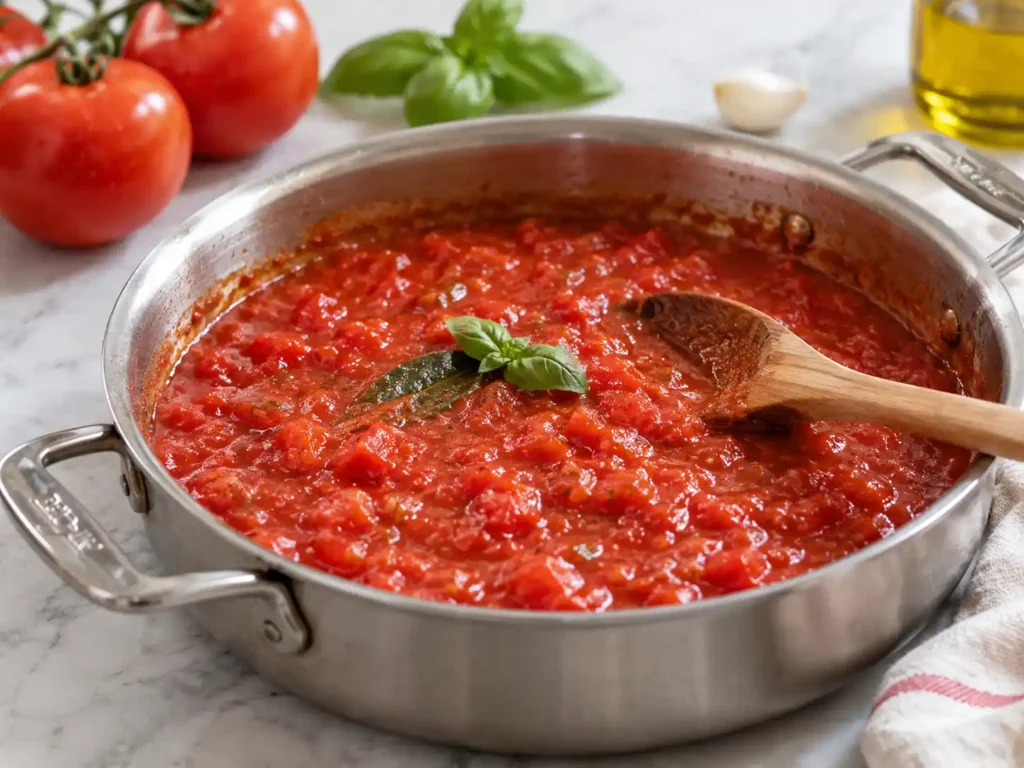
If the sauce still looks loose after 15 minutes, continue cooking for a few more minutes. It is ready when it looks glossy and spoonable, with enough body to cling to pasta instead of pooling like tomato juice.
For especially juicy tomatoes, removing some of the loose seed gel before grating can also help shorten the reduction time.
Do You Need to Peel or Seed the Tomatoes?
You do not need to blanch or peel the tomatoes before making this sauce. Grating them against the large holes of a box grater removes most of the flesh while leaving the tougher skin behind in your hand.
Removing the seeds is optional. For most ripe tomatoes, there is no need to seed them completely. If the tomatoes are very juicy, scooping out some of the loose seed gel can reduce excess liquid and shorten the cooking time.
The goal is simply to remove what would make the sauce unnecessarily watery or coarse, without adding extra prep that does not improve the final result.
The Best Tomatoes for Fresh Tomato Sauce
Choose tomatoes that are fully ripe, fragrant, and flavorful. Good tomatoes matter more here than using one specific variety because this sauce cooks quickly and relies on the fresh tomato flavor instead of a long simmer.
Plum or Roma tomatoes are especially useful because they are usually meatier and less watery, which helps the sauce reduce faster. Garden tomatoes, beefsteak tomatoes, or other ripe varieties can also work well, but juicier tomatoes may need a little more time in the pan.
Avoid firm, underripe tomatoes whenever possible. They tend to give the sauce less flavor and can make it taste sharper even after cooking.
How to Balance the Acidity
Fresh tomato sauce can taste more or less acidic depending on the tomatoes you use. Start by letting the sauce reduce fully and tasting it only after the flavors have concentrated.
If the sauce tastes sharp, first check the salt. A small adjustment can often make the tomato flavor taste more balanced without changing the recipe.
If the acidity is still too strong, add a very small pinch of sugar, stir well, and taste again. The goal is not to make the sauce sweet, only to soften an overly sharp edge.
Using ripe tomatoes is the best way to avoid needing much adjustment in the first place.
Ways to Use Fresh Tomato Sauce
This sauce is especially good with pasta, where its lighter texture can coat the noodles without feeling heavy. Toss it with spaghetti, penne, or another pasta shape, then finish with fresh basil or grated Parmesan if you like.
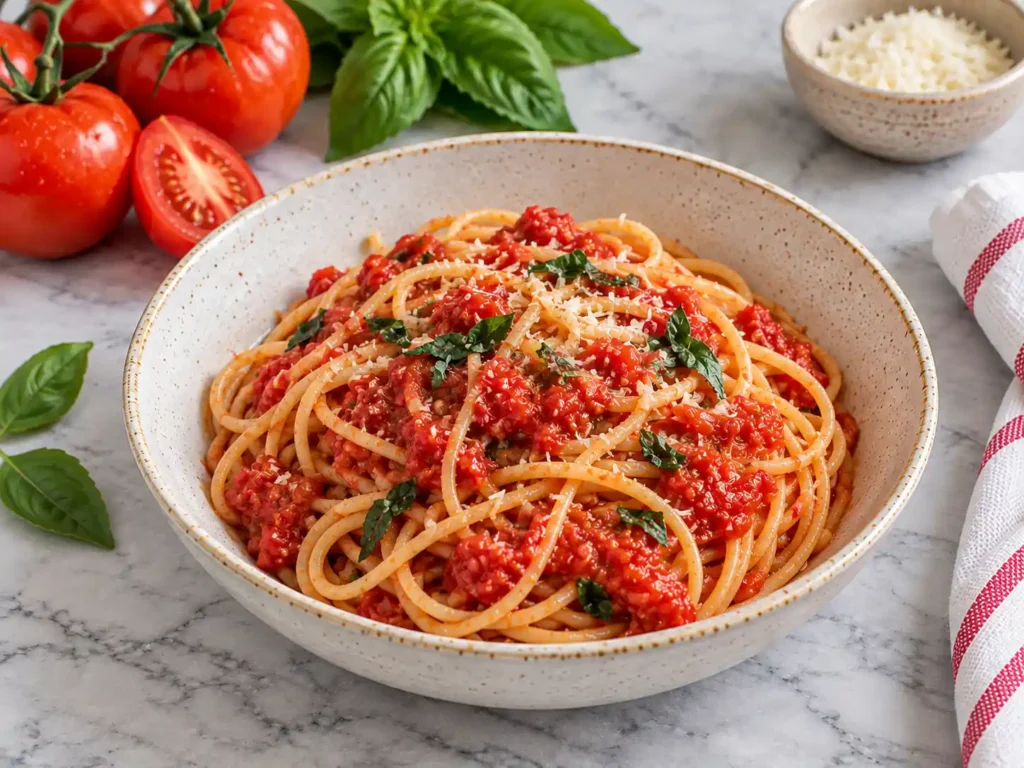
You can also spoon it over cooked vegetables, serve it with grilled chicken, or use it as a simple base for baked dishes. For pizza, let the sauce reduce a little longer so less moisture reaches the crust, then use it as the tomato base for this homemade turkey pizza.
Because this is a fresh, relatively light sauce, it works best in recipes where you want the tomato flavor to stay bright rather than deeply cooked.
How to Store and Freeze Fresh Tomato Sauce
Let the sauce cool before transferring it to a clean, airtight container. Refrigerate it and use it within 3 to 4 days, in line with USDA guidance for refrigerated leftovers.
For longer storage, freeze the cooled sauce in a freezer-safe container, leaving a little room at the top for expansion. Thaw it in the refrigerator, then reheat gently on the stove.
If the sauce looks slightly separated after thawing, stir it well as it warms. A few minutes of gentle simmering usually brings the texture back together.
This recipe is intended for refrigerator or freezer storage only. It has not been developed or tested for home canning.
Frequently Asked Questions
Yes. In this recipe, grating the tomatoes removes most of the skin as you work, so there is no need to blanch and peel them first.
No. Removing the seeds is optional. If your tomatoes are especially watery, you can scoop out some of the loose seed gel before grating to help the sauce reduce faster.
Some tomato varieties naturally contain more water than others. Keep the sauce uncovered and let it simmer a little longer so the excess moisture can evaporate.
Yes. Roma or other plum tomatoes are a good choice because they are usually meatier and less watery, but any ripe, flavorful tomato can work.
Yes. Cool the sauce completely, transfer it to a freezer-safe container, and freeze it for longer storage. Thaw it in the refrigerator before reheating.
You can, but reduce it a little further first so it is thicker and less likely to make the crust soggy.
Quick Fresh Tomato Sauce
- Total Time: 30 minutes
- Yield: About 2½ cups 1x
Description
A quick fresh tomato sauce made with ripe tomatoes, olive oil, garlic, basil, and a short stovetop simmer. Grating the tomatoes removes most of the skins while a quick reduction creates a light sauce with enough body to coat pasta.
Ingredients
- 5 pounds ripe fresh tomatoes
- 2 tablespoons olive oil
- 1 tablespoon tomato paste
- ¾ teaspoon salt, plus more to taste
- 1 garlic clove, halved
- 1 fresh basil sprig
- 1 bay leaf
Instructions
- Cut the tomatoes in half crosswise. If they are especially juicy, scoop out some of the loose seed gel.
- Hold each tomato half by the skin and grate the cut side against the large holes of a box grater. Discard the skins and transfer the grated tomato pulp and juices to a wide, shallow saucepan.
- Add the olive oil, tomato paste, salt, garlic, basil sprig, and bay leaf. Stir until the tomato paste is evenly mixed into the tomatoes.
- Place the pan over medium-high heat and bring the mixture to a gentle boil. Reduce the heat as needed to maintain a steady simmer.
- Cook uncovered for 10 to 15 minutes, stirring occasionally, until the sauce has reduced enough to coat a spoon. If the tomatoes are very watery, cook for a few extra minutes.
- Remove the garlic, basil sprig, and bay leaf. Taste and add more salt if needed. Serve warm, or cool before storing.
Notes
Tomatoes: Use fully ripe, flavorful tomatoes. Plum or Roma tomatoes usually reduce faster because they contain less water, but other ripe tomatoes work too.
Watery tomatoes: If the sauce is still loose after 15 minutes, continue simmering uncovered for a few more minutes.
Seeds: Removing the seeds is optional. For very juicy tomatoes, scooping out some of the loose seed gel can help the sauce thicken faster.
Acidity: Taste the sauce after it has reduced. If it still tastes overly sharp, add a very small pinch of sugar and taste again.
Storage: Refrigerate in an airtight container for 3 to 4 days. For longer storage, freeze the cooled sauce in a freezer-safe container and thaw in the refrigerator before reheating.
Canning: This recipe has not been developed or tested for home canning.
- Prep Time: 15 minutes
- Cook Time: 15 minutes
- Category: Sauce
- Method: Stovetop
Nutrition
- Serving Size: 1/2 cup
- Calories: 130
- Sugar: 12 g
- Sodium: 370 mg
- Fat: 6 g
- Saturated Fat: 1 g
- Unsaturated Fat: 5 g
- Trans Fat: 0 g
- Carbohydrates: 18 g
- Fiber: 6 g
- Protein: 4 g
- Cholesterol: 0 mg
1 thought on “Quick Fresh Tomato Sauce Recipe”