
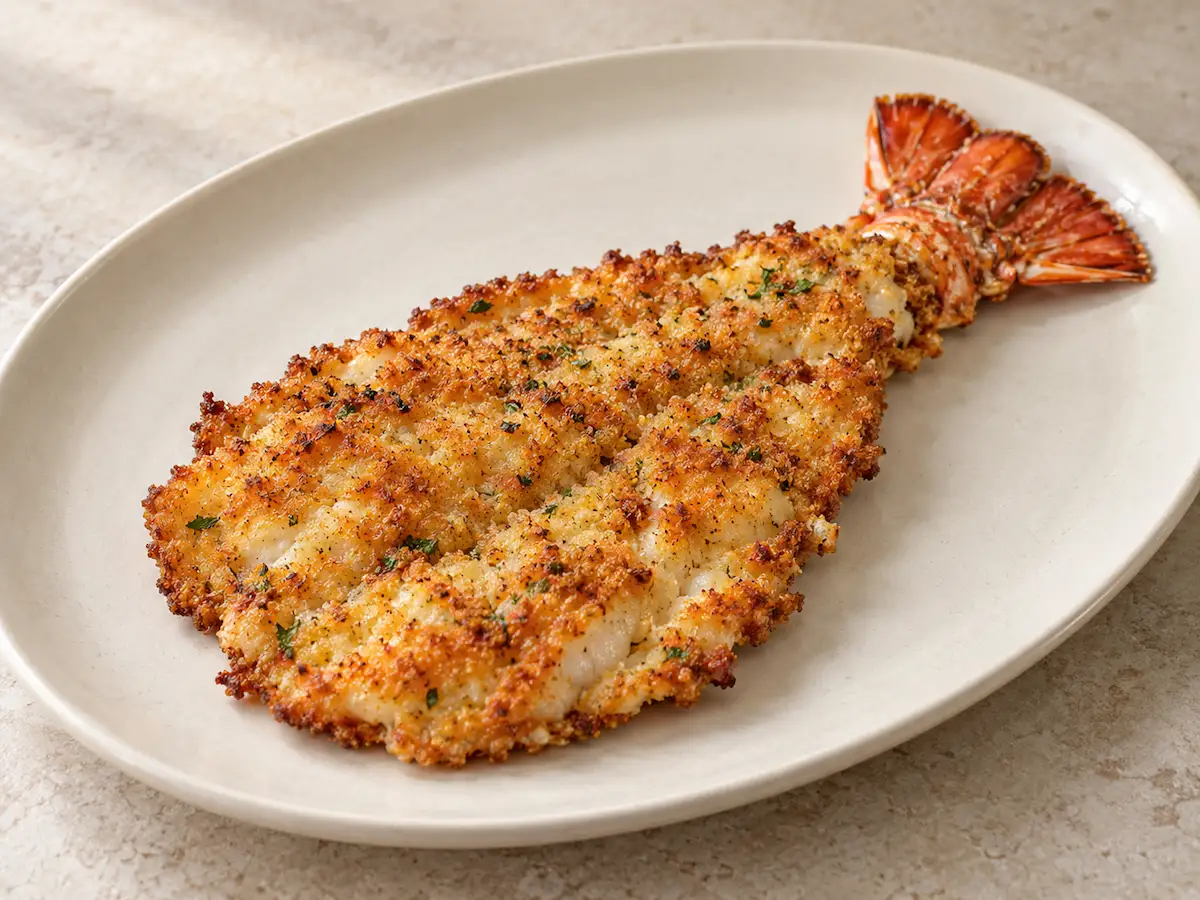
This crispy lobster cutlet recipe turns a whole lobster tail into a thin, breaded cutlet with a golden, crunchy coating. The lobster meat is butterflied, gently flattened, coated in flour, eggs, and Italian-seasoned breadcrumbs, then pan-fried in olive oil and butter until cooked through.
Unlike lobster cakes made with chopped meat, this recipe keeps the lobster tail in one piece. The key is to handle the delicate meat gently, keep the breading from browning too quickly, and check that the lobster is fully cooked before serving.
Ingredients for Crispy Lobster Cutlets
You only need a few ingredients to make these crispy lobster cutlets. The lobster tails are coated in flour, eggs, and seasoned breadcrumbs, then pan-fried in olive oil and butter.
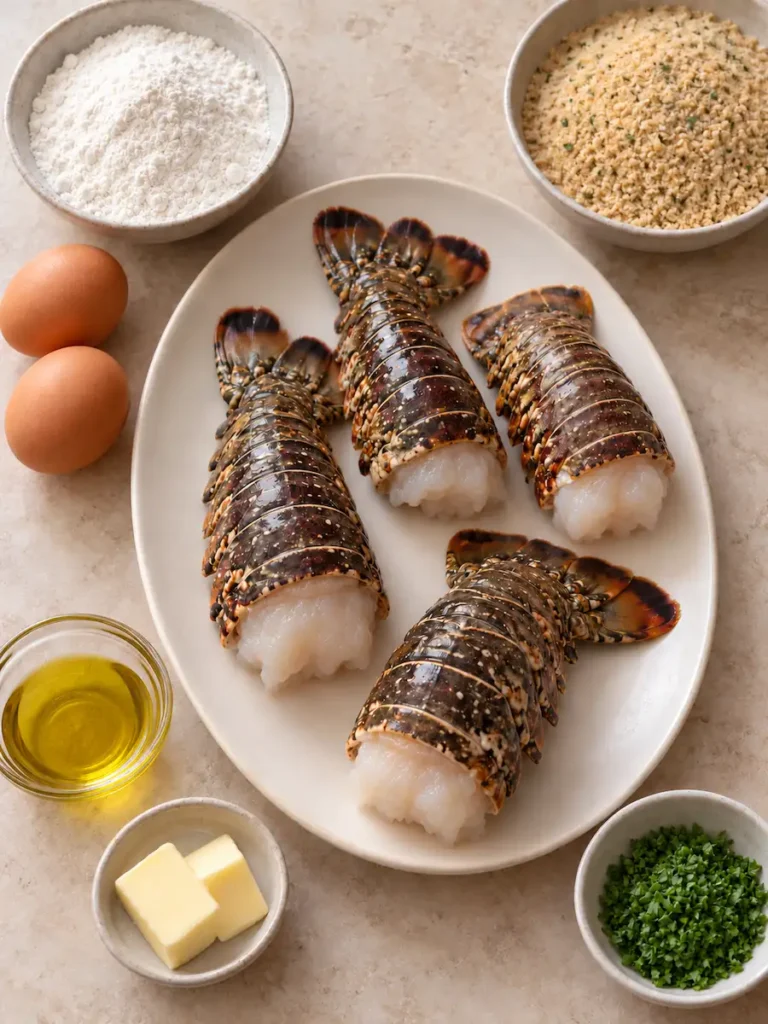
- 4 raw spiny lobster tails (6–8 oz each): Choose whole tails with their shells. If frozen, thaw them safely before preparing the cutlets.
- 1 cup all-purpose flour: Creates the first coating and helps the eggs stick to the lobster.
- 2 large eggs: Beaten eggs help the breadcrumbs adhere to the meat.
- 1½ cups Italian-seasoned breadcrumbs: Form the crispy, golden coating.
- 2 tablespoons fresh parsley, finely chopped: Adds fresh herb flavor to the breadcrumb mixture.
- Salt and freshly ground black pepper, to taste: Season the lobster before breading.
- ¼ cup olive oil: Used for pan-frying the breaded cutlets.
- 2 tablespoons unsalted butter: Combined with the olive oil for flavor and browning.
How to Make Crispy Lobster Cutlets
Making lobster cutlets involves three main steps: preparing the lobster tails, coating them in breadcrumbs, and pan-frying until golden and cooked through. Handle the meat gently to keep each cutlet in one piece.
Step 1: Remove the Lobster Meat
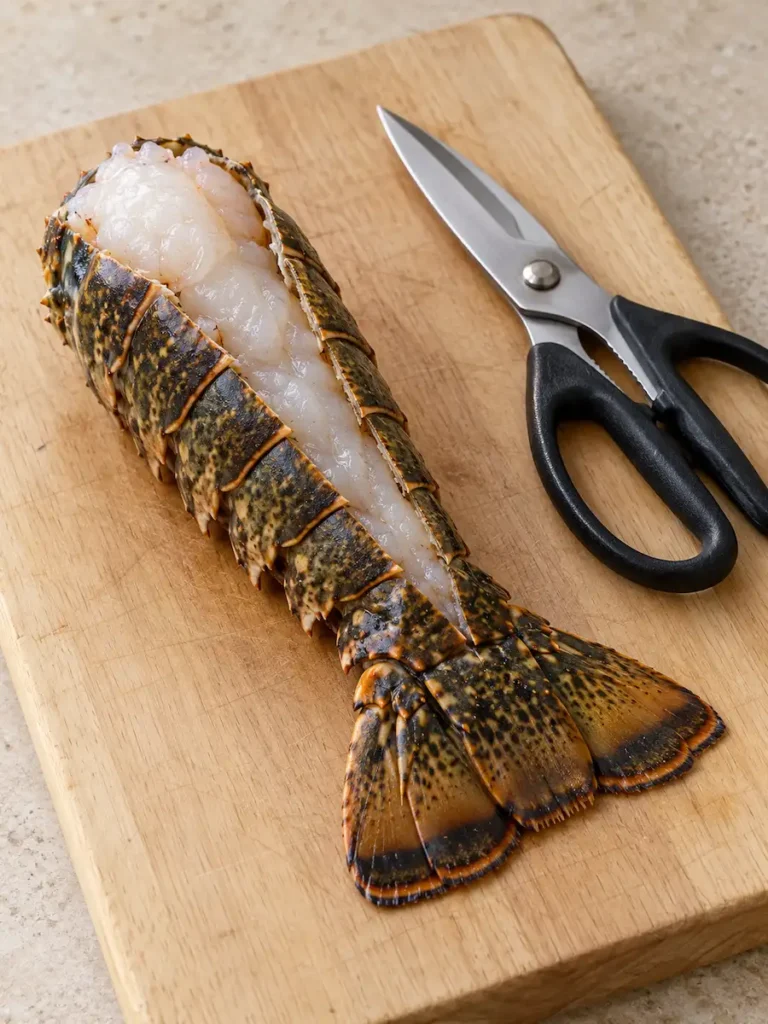
Using kitchen shears, carefully cut open the shell of each raw lobster tail. Gently separate the meat from the shell without tearing it.
If possible, keep the tail fin attached to the meat for the classic lobster cutlet presentation. Don’t force it if it starts to separate. The tail fin is not edible.
Remove the dark vein if present, then pat the lobster meat dry with paper towels.
Step 2: Butterfly and Flatten the Lobster
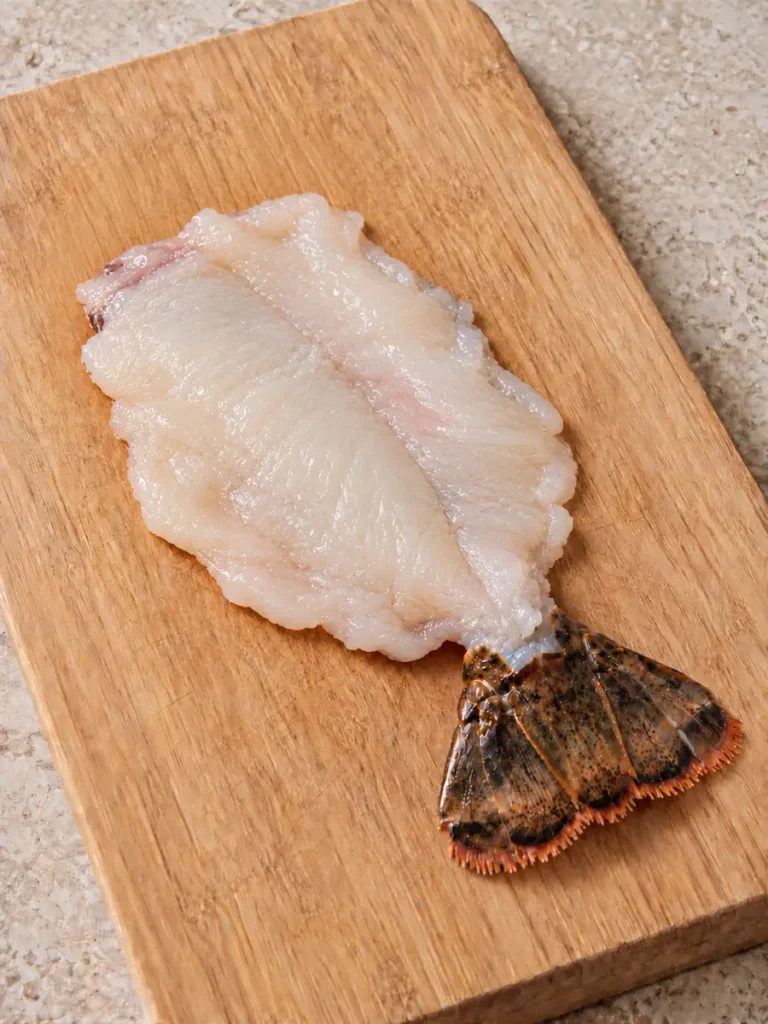
Place the lobster meat on a cutting board. Carefully slice the thickest part lengthwise without cutting all the way through, then open it like a book.
Place the meat between two sheets of plastic wrap or parchment paper. Using the flat side of a meat mallet, gently pound it toward an even thickness of about ¼ inch.
Work carefully and stop if the meat begins to tear.
Step 3: Prepare the Breading
Set out three shallow bowls:
- Add the all-purpose flour to the first bowl.
- Beat the eggs in the second bowl.
- Mix the Italian-seasoned breadcrumbs with the chopped parsley in the third bowl.
Lightly season the lobster meat with salt and black pepper.
Step 4: Coat the Lobster Cutlets
Dredge each piece of lobster in the flour, shaking off any excess.
Dip it into the beaten eggs, letting the extra egg drip off. Then press it gently into the breadcrumb mixture until both sides are evenly coated.
Repeat with the remaining lobster tails.
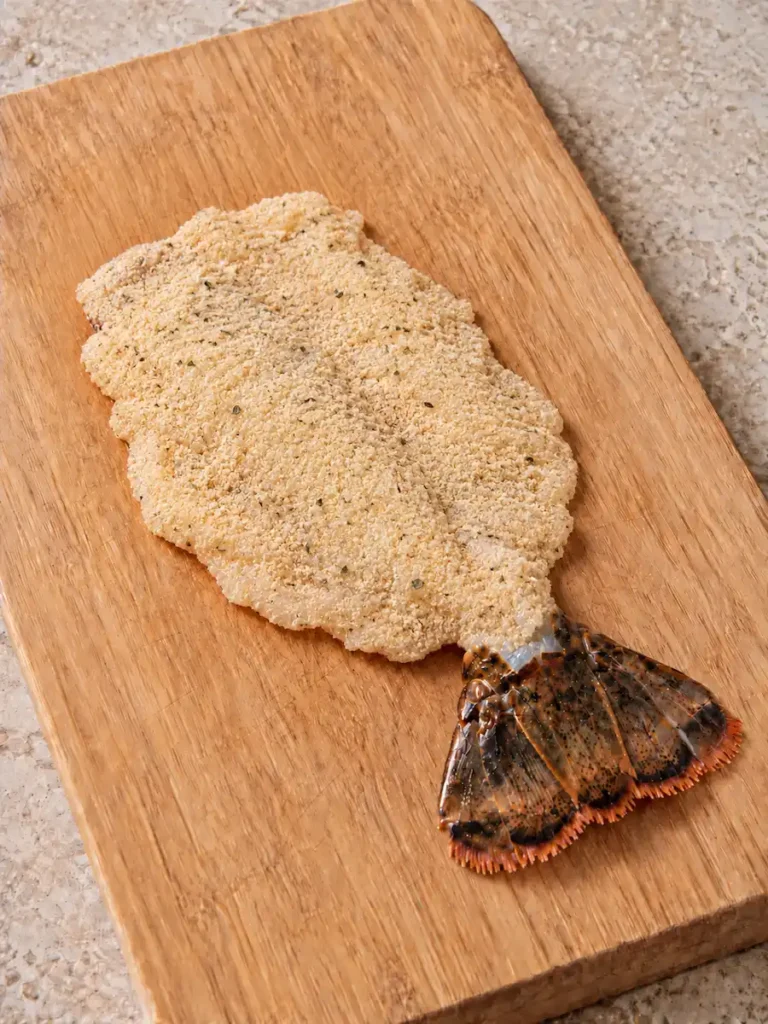
Step 5: Pan-Fry Until Golden
Heat the olive oil and unsalted butter in a large skillet over medium heat.
Once the butter has melted and begins to foam, carefully place the breaded lobster cutlets in the skillet. Avoid overcrowding the pan and cook in batches if necessary.
Fry for approximately 2–3 minutes per side as an initial guide, turning carefully to keep the coating intact.
If the breadcrumbs start browning too quickly, reduce the heat. Cooking time may vary depending on the thickness of the lobster.
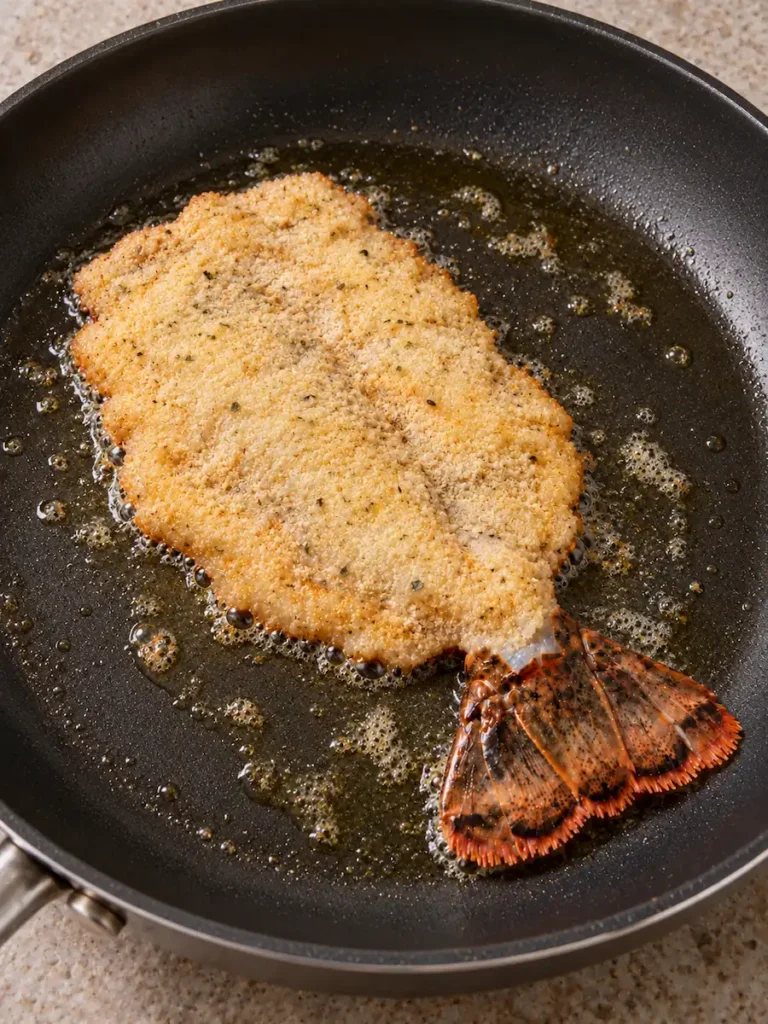
Step 6: Check for Doneness and Serve
Check the thickest part of each cutlet. The lobster meat should be pearly white or opaque and firm, without translucent areas. Use a food thermometer when an accurate internal reading is possible.
For official guidance on checking lobster doneness, see FoodSafety.gov’s safe cooking chart.
Transfer the cooked cutlets to a wire rack or a plate lined with paper towels to drain excess oil.
Serve immediately while the breading is still crispy.
Tips for the Best Crispy Lobster Cutlets
A few simple precautions can help you get a golden, crispy coating without overcooking the lobster.
- Thaw and dry the lobster completely. If using frozen tails, thaw them before preparing the cutlets. Pat the meat dry with paper towels so the breading sticks better.
- Flatten the meat gently. Use light taps with the flat side of a meat mallet. Aim for an even thickness, but don’t force the lobster to ¼ inch if it starts to tear.
- Shake off excess flour and egg. A thin, even coating helps the breadcrumbs stick without forming thick, uneven layers.
- Keep the heat under control. Cook over medium heat and watch the breadcrumbs closely. If they turn dark too quickly, lower the heat so the lobster has time to cook through.
- Avoid overcrowding the skillet. Leave enough space to turn each cutlet without breaking it. Cook in batches if necessary.
- Check the lobster before serving. The 2–3 minutes per side is only a guide. The meat should be pearly white or opaque and firm, not translucent. Avoid cooking it longer than necessary.
How to Serve Lobster Cutlets
Serve the lobster cutlets right after frying and draining, while the breadcrumb coating is still hot and crispy.
Place one cutlet on each plate, keeping the tail fin visible if it remained attached during preparation. The fin is for presentation only and is not edible.
For a complete meal, pair the cutlets with a simple green salad or roasted frozen vegetables. No additional sauce is needed to enjoy the crispy coating and lobster meat.
How to Store and Reheat Lobster Cutlets
Refrigerate: Let leftover lobster cutlets cool briefly, then place them in an airtight container in the refrigerator at 40°F (4°C) or below. Store for up to 3–4 days. Refrigerate within 2 hours of cooking, or within 1 hour if the temperature is above 90°F (32°C).
Reheat: Warm the cutlets gently in a skillet over low heat until heated through to an internal temperature of 165°F (74°C). Avoid prolonged heating, which can make the lobster tough. The breadcrumb coating may not be as crispy as when freshly cooked.
For the best texture: Serve the cutlets immediately after frying whenever possible. Freshly cooked lobster has the best chance of keeping its crisp coating and tender texture.
Frequently Asked Questions
Yes. Frozen lobster tails work as long as they are raw and completely thawed before preparation. Thaw them in the refrigerator, then pat the meat dry before flattening and breading.
No. Keeping the tail fin attached gives the cutlet its recognizable presentation, but it isn’t necessary for cooking. If the fin separates while removing the shell, you can still prepare the cutlet. The fin is not edible.
Panko is used in other lobster cutlet recipes and can produce a different coating texture. This version uses Italian-seasoned breadcrumbs, so stick with those if you want to follow the recipe as written.
No. This is a homemade version inspired by the viral lobster cutlet style associated with Locale in New Jersey. It uses a documented home-cooking method and is not the restaurant’s official recipe.
Crispy Lobster Cutlet Recipe (Whole Lobster Tail)
- Total Time: 30 minutes
- Yield: 4 servings 1x
Description
These crispy lobster cutlets are made with whole lobster tails, gently flattened, coated in Italian-seasoned breadcrumbs, and pan-fried in olive oil and butter until golden and cooked through.
Ingredients
- 4 raw spiny lobster tails (6–8 oz each)
- 1 cup all-purpose flour
- 2 large eggs, beaten
- 1½ cups Italian-seasoned breadcrumbs
- 2 tablespoons fresh parsley, finely chopped
- Salt, to taste
- Freshly ground black pepper, to taste
- ¼ cup olive oil
- 2 tablespoons unsalted butter
Instructions
- Prepare the lobster tails: Using kitchen shears, carefully cut open each raw lobster tail shell and gently remove the meat. Keep the tail fin attached if possible, but don’t force it if it separates. Remove the dark vein if present and pat the meat dry with paper towels.
- Butterfly and flatten: Slice the thickest part of each tail lengthwise without cutting all the way through. Open it like a book, place it between two sheets of plastic wrap or parchment paper, and gently flatten with a meat mallet toward an even ¼-inch thickness. Stop if the meat begins to tear.
- Prepare the breading: Place the flour in one shallow bowl and the beaten eggs in another. Mix the Italian-seasoned breadcrumbs and parsley in a third bowl. Lightly season the lobster with salt and black pepper.
- Bread the lobster: Coat each lobster cutlet in flour, shaking off the excess. Dip into the beaten eggs, then gently press into the breadcrumbs until both sides are evenly coated.
- Pan-fry the cutlets: Heat the olive oil and unsalted butter in a large skillet over medium heat. When the butter melts and begins to foam, carefully add the cutlets without overcrowding the pan. Fry for approximately 2–3 minutes per side as an initial guide, turning gently. Cook in batches if needed and reduce the heat if the coating browns too quickly.
- Check for doneness and serve: Check the thickest part of each cutlet. The lobster should be pearly white or opaque and firm, with no translucent areas. Use a food thermometer when an accurate reading is possible. Drain briefly on a wire rack or paper towels and serve immediately.
Notes
- The ¼-inch thickness is a guideline. Flatten the lobster gently and stop if the meat begins to tear.
- Cooking time may vary depending on the size and thickness of the lobster tails. Use 2–3 minutes per side as an initial guide, not a guarantee of doneness.
- The lobster meat should be pearly white or opaque and firm, with no translucent areas. Check the thickest part before serving.
- Cook in batches if necessary to avoid overcrowding the skillet. Reduce the heat if the breadcrumbs brown too quickly.
- If the tail fin remains attached, it is for presentation only and is not edible.
- Serve immediately after frying for the crispiest coating.
- Prep Time: 20 minutes
- Cook Time: 10 minutes
- Category: Dinner
- Method: Pan-Frying
1 thought on “Crispy Lobster Cutlet Recipe (Whole Lobster Tail)”